
Class 6 Grammar Worksheet on Modal Verbs (Chance)

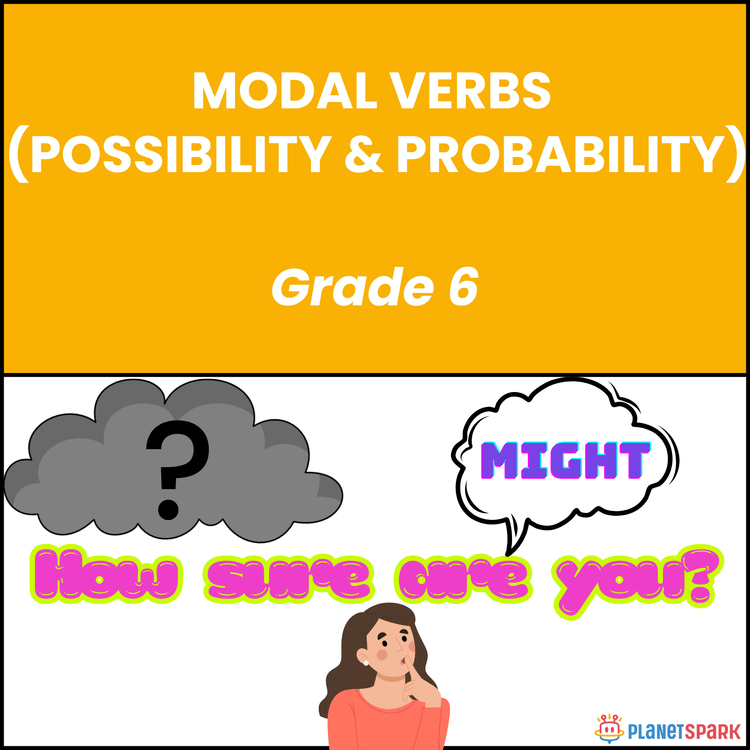
Class 6 Grammar Worksheet on Modal Verbs (Chance)
Modal Verbs (Possibility & Probability) for Class 6: Enhancing Grammar Skills
This Grade 6 worksheet helps students understand and use modal verbs for expressing possibility and probability. Through engaging exercises, students will practice using modal verbs like might, may, could, and will to talk about what might happen or what is likely to happen. The worksheet includes activities such as underlining modal verbs in sentences, choosing the correct option, and rewriting sentences with modal verbs.
By completing this worksheet, students will:
- Learn how to use modal verbs for expressing possibility (e.g., might, may, could).
- Understand how to use modal verbs for expressing probability (e.g., will, might).
- Improve sentence structure and fluency by using modal verbs correctly in different contexts.
Answer Key:
Exercise No. 1 – Underline the Modal Verb Showing Possibility or Probability in Each Sentence:
- She might find the keys in her bag.
Modal Verb: might (Possibility) - I may go to the store later if I have time.
Modal Verb: may (Possibility) - I could take the bus if I miss the train.
Modal Verb: could (Possibility) - They might not be at home when we arrive.
Modal Verb: might (Possibility) - We might have a chance to meet him tomorrow.
Modal Verb: might (Probability) - They could come to the game if they finish their work.
Modal Verb: could (Possibility) - They may need help with the presentation.
Modal Verb: may (Possibility) - It might rain later this evening.
Modal Verb: might (Possibility) - He could be the one who solved the mystery.
Modal Verb: could (Probability) - She may not like the gift, but I think she will.
Modal Verb: may (Possibility)
Exercise No. 2 – Choose the Correct Sentence:
- a) She might go to the park later.
- a) They may visit us tomorrow.
- b) He could be at home right now.
- b) We should try to finish early.
- a) He may not come to the party.
- b) They might help us with the project.
- b) She could have finished the task by now.
- b) We may take a break soon.
- b) He might be able to join us later.
- a) They may have already left.
Exercise No. 3 – Apply the Rule to Rewrite Each Sentence:
- I think I will go to the concert.
- She’s probably going to join us for lunch.
- We know they will arrive soon.
- The event will start at 10 AM.
- It’s likely that they’ll leave by 5 PM.
- I believe we will be late for the meeting.
- I am sure we will see him at the party.
- She might have missed the bus.
- It’s possible that the movie will be canceled.
- They will definitely come to the wedding.
Exercise No. 4 – Fill in the Blanks:
- may
- might
- could
- might
- may
- could
- might
- could
- may
- might
Exercise No. 5 – Sample Answer for Paragraph Writing:
When making decisions about future events, we often use modal verbs to express possibility and probability. For example, we might decide to go to a concert if it’s not raining, or we could take the bus if we miss the train. It’s possible that we may meet our friends tomorrow, or they might be too busy. I believe the event will start on time, but there’s a chance that the schedule may change. When talking about what we are certain about, we use modal verbs like will to express a strong probability. We are sure the concert will happen as planned, and they will definitely come to the event.
Help your child master the use of modal verbs for possibility and probability with a fun and interactive grammar lesson.
Frequently Asked Questions
Modal verbs like "may," "might," and "could" express the likelihood or chance of something happening.
By using modal verbs, students can communicate uncertainty or probability, such as "It might rain tomorrow."
They allow students to express different levels of certainty and possibility, enhancing their communication skills.